The Complete Beginner's Guide to Apartment Gardening (That Won't Cost Your Security Deposit)
Learn how to grow fresh food in your apartment without drilling, permanent modifications, or landlord battles. A practical guide from someone who killed 7 basil plants before figuring it out.

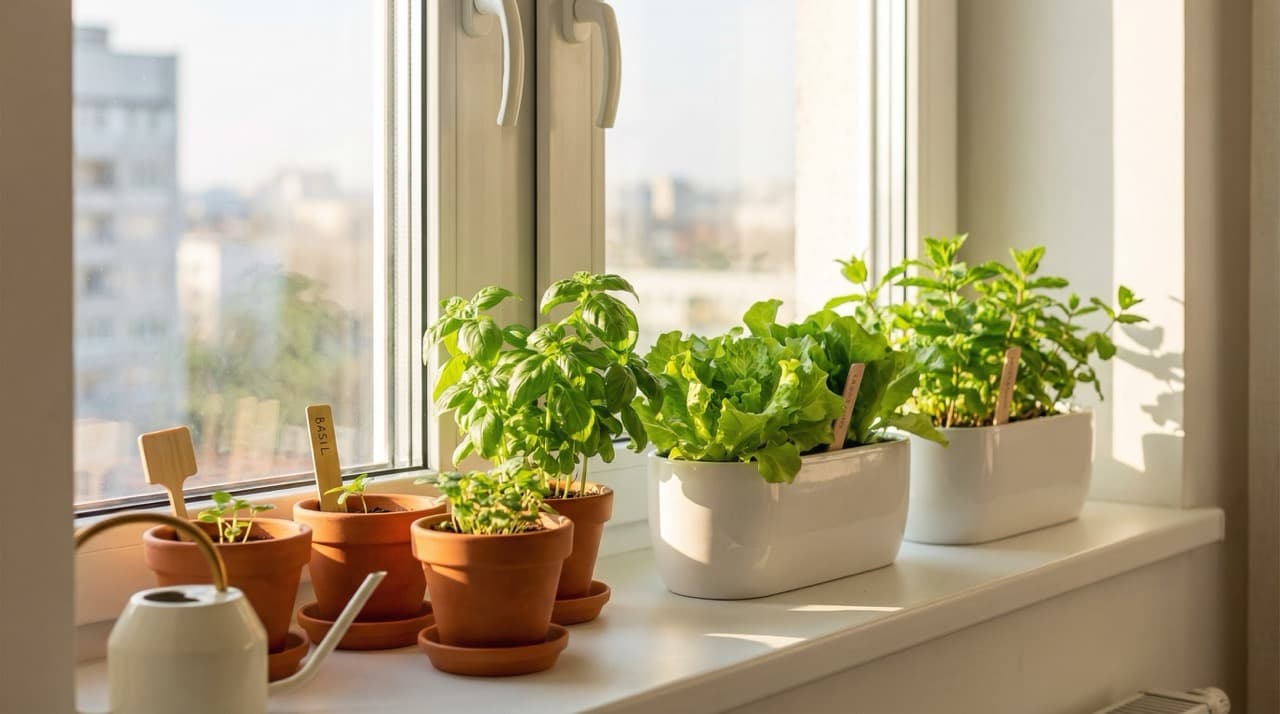
The Concrete Jungle Can Be an Ecosystem
You live in an apartment. You have no yard, limited light, and a landlord who definitely will not appreciate holes in the walls. You have probably killed a few houseplants in your time (join the club - I killed seven basil plants before I figured this out).
Here is the thing: none of that disqualifies you from growing your own food.
This guide covers the foundational principles of apartment gardening - the same principles that let me grow weekly salads from my Chicago apartment windowsill while getting my full security deposit back every time.
The Three Renters Rules
Before we talk about seeds or soil, you need to understand the framework that makes apartment gardening sustainable:
Rule 1: Zero Damage
Every setup in your apartment garden must be completely removable without leaving marks, holes, or residue. This means:
- No drilling or nails
- No permanent adhesives (command strips are your friend)
- Tension rods, suction cups, and freestanding structures only
Rule 2: Zero Mess
Water damage is the fastest way to lose your deposit. Your systems need:
- Catchment trays under everything
- Drainage plans that account for splashes
- Waterproofing for any surface that might get wet
Rule 3: Aesthetics
Your garden should look intentional, not chaotic. When your landlord visits, it should look like decor, not an experiment. This means:
- Consistent container materials and colors
- Clean lines and organized arrangements
- No exposed equipment that looks "science project"
Understanding Your Apartment as an Ecosystem
Your apartment is not just a living space - it is a series of microclimates with different growing potential.
The Micro-Zone Assessment
Walk through your apartment and categorize each area:
Zone A (High Light):
- South-facing windows
- Areas with 6+ hours of direct light
- Best for: tomatoes, peppers, basil
Zone B (Medium Light):
- East or west-facing windows
- Areas with 3-5 hours of direct light
- Best for: lettuce, herbs, spinach
Zone C (Low Light):
- North-facing windows
- Interior spaces
- Best for: microgreens, sprouts, mushrooms
Zone D (No Natural Light):
- Closets, basements, windowless rooms
- Requires grow lights
- Best for: microgreens with LED panels
Your First Week: Getting Started
Day 1-2: Map Your Light
Spend two days observing where sunlight falls in your apartment. Note:
- Which windows get morning vs afternoon light
- How long the sun actually hits each spot
- Any obstacles (buildings, trees) blocking light
Day 3-4: Plan Your Setup
Based on your light assessment:
- Choose your primary growing zone
- Measure the space available
- Research containers that fit your aesthetic
Day 5-7: Start Small
For your first grow:
- Start with lettuce or microgreens (forgiving, fast results)
- Use a single container in your best light spot
- Set up a watering routine
Common Beginner Mistakes
Mistake 1: Starting with Tomatoes
Tomatoes need 8+ hours of direct light and significant space. Start with leafy greens that are more forgiving.
Mistake 2: Overwatering
More plants die from overwatering than underwatering. Stick your finger in the soil - if it is damp 1 inch down, wait.
Mistake 3: Using Outdoor Soil
Outdoor potting mix often contains pests and is too heavy for indoor use. Use a lightweight, indoor-specific mix.
What You Can Actually Grow
In a typical apartment, expect success with:
High Success Rate:
- Microgreens (harvest in 7-14 days)
- Lettuce and salad greens
- Herbs (basil, cilantro, parsley, mint)
- Green onions (regrow from scraps)
Medium Difficulty:
- Dwarf tomatoes (with enough light)
- Peppers (slow but rewarding)
- Strawberries (needs good light)
Advanced:
- Mushrooms (different skill set entirely)
- Citrus (requires patience and space)
Your Next Steps
- Complete your Micro-Zone Assessment this week
- Choose one Zone B or Zone C spot for your first grow
- Get a single container and try lettuce or microgreens
The key is starting small, learning from your space, and building systems that work with your apartment, not against it.
This article covers the foundations taught in Sky-High Harvest, the complete guide to vertical gardening for renters and apartment dwellers.