5 Renter-Friendly Vertical Garden Setups That Won't Cost Your Security Deposit
Build vertical gardens using tension rods, suction cups, and freestanding structures. No drilling, no damage, full deposit back. Practical setups tested in real apartments.

The Infrastructure Problem
Every vertical gardening guide eventually tells you to "install brackets" or "mount shelving." Great advice if you own your home. Useless if you rent.
After years of apartment gardening in Chicago rentals, I have developed five vertical garden setups that require zero drilling, zero permanent modifications, and zero awkward conversations with your landlord.
These are not theoretical ideas. I have built every one of these in a real apartment and gotten my full security deposit back.
Setup 1: The Tension Rod Window Garden
Best for: Herbs, lettuce, small trailing plants
Light needed: Medium to high (east, south, or west window)
Cost: $30-50
How It Works
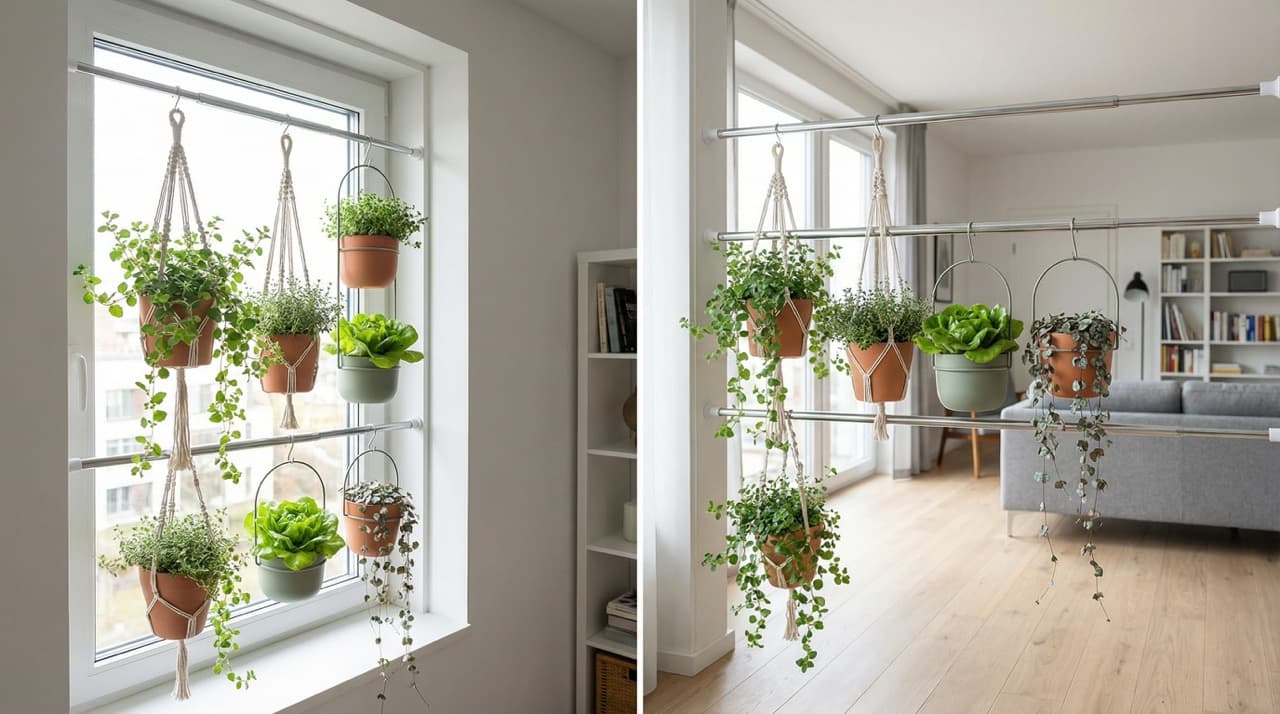
Tension rods (the kind used for shower curtains) wedge between window frame sides. Hang lightweight containers from S-hooks.
What You Need
- 2-3 tension rods sized for your window width
- S-hooks (the small ones, not the industrial kind)
- Hanging planters or DIY containers with handles
- Lightweight growing medium
Pro Tips
- Space rods 12-18 inches apart vertically
- Stagger plants so upper levels do not block light to lower levels
- Use hanging planters with built-in saucers to catch drips
- Test tension before adding plants - if it slips with empty containers, it will definitely fail with wet soil
What to Grow
Best performers: trailing herbs (oregano, thyme), lettuce, small strawberries, pothos (decorative)
Setup 2: The Suction Cup Herb Wall
Best for: Kitchen herbs you use daily
Light needed: Medium (any window that gets 3+ hours light)
Cost: $15-25
How It Works
Heavy-duty suction cups with hooks attach directly to window glass. Attach small containers or purpose-built suction planters.
What You Need
- Heavy-duty suction cups rated for 5+ lbs
- Small, lightweight planters (under 1 lb when planted)
- Quick-drain growing medium
The Critical Mistake to Avoid
Standard suction cups fail. You need:
- Cups with lever-lock mechanisms
- Clean glass (use rubbing alcohol before attaching)
- Maximum 1 lb per cup (including soil, water, and container)
What to Grow
Kitchen herbs only: basil, cilantro, parsley, chives. Keep containers small since weight is your limiting factor.
Setup 3: The Over-Door Growing Station
Best for: Microgreens, seedlings, low-light crops
Light needed: None required (uses grow lights)
Cost: $60-100
How It Works
An over-door shoe organizer or purpose-built rack hangs from any standard door. Add LED grow light strips for controlled growing environment.
What You Need
- Over-door rack with flat shelves (not the pocket-style shoe organizers)
- LED grow light strips (6500K for greens)
- Small trays that fit the shelf depth
- Timer for 12-16 hour light cycles
Why This Works
Closet doors, bathroom doors, bedroom doors - every apartment has doors that can become growing stations. The back of a door facing into a closet gives you complete climate control.
What to Grow
Microgreens are the star here. Radish, sunflower, pea shoots - all grow perfectly under LEDs in 7-14 days. Also good for starting seedlings before moving them to window spots.
Setup 4: The Rolling Tower Garden
Best for: Leafy greens, herbs, strawberries
Light needed: Low to medium (can be moved to follow light)
Cost: $80-150
How It Works
A freestanding vertical planter on wheels. Move it to catch morning light by the east window, then afternoon light by the west window.
What You Need
- Vertical tower planter (store-bought or DIY from stacking pots)
- Plant caddy with wheels rated for the weight
- Lightweight growing medium (standard soil is too heavy)
The Mobility Advantage
The ability to chase light throughout your apartment is underrated. A rolling tower in a studio apartment can effectively double your growing capacity by maximizing light exposure.
What to Grow
Lettuce, spinach, kale, herbs, and strawberries all thrive in tower systems. The key is matching plants with similar water needs on the same tower.
Setup 5: The Living Curtain
Best for: Trailing plants, privacy, aesthetics
Light needed: Medium to high
Cost: $40-70
How It Works
A combination of ceiling hooks (the removable kind) and tension rods creates a framework for trailing plants that form a living curtain.
What You Need
- Removable ceiling hooks (Command brand or similar)
- Fishing line or plant wire
- Trailing plant varieties
- Small containers with secure hanging mechanisms
The Setup Process
- Install removable hooks in ceiling near window
- Run fishing line or wire vertically
- Attach small containers at intervals
- Plant trailing varieties that will grow along the lines
What to Grow
Pothos, string of pearls, and trailing herbs (oregano, thyme) work well. For edibles, trailing tomato varieties can work with enough light.
The Foundation: Lightweight Growing Medium
All these setups share one requirement: you cannot use standard potting soil. It is too heavy, holds too much water, and often contains pest eggs.
For vertical setups, use a mix of:
- Coco coir (lightweight, good drainage)
- Perlite (adds drainage, reduces weight)
- Worm castings (nutrients without bulk)
The full recipe is in the Sky-High Mix chapter, but the principle is simple: lighter is better for anything that hangs.
Choosing Your First Setup
If you have good window light: Start with Setup 1 (Tension Rod Garden)
If you want herbs in the kitchen: Start with Setup 2 (Suction Cup Herbs)
If your apartment is dark: Start with Setup 3 (Over-Door Station)
If you have floor space: Start with Setup 4 (Rolling Tower)
If you want it to look like decor: Start with Setup 5 (Living Curtain)
The best setup is the one you will actually maintain. Start with one, master it, then expand.
These setups are adapted from the Vertical Infrastructure chapter in Sky-High Harvest, which includes 12 complete renter-friendly setups with detailed build instructions and material lists.